 Centre for Air and Space Policy
The Concealed Consequences of Space Debris: Metal Vaporisation in the Earth’s Atmosphere
Penulis
Centre for Air and Space Policy
Dipublikasikan
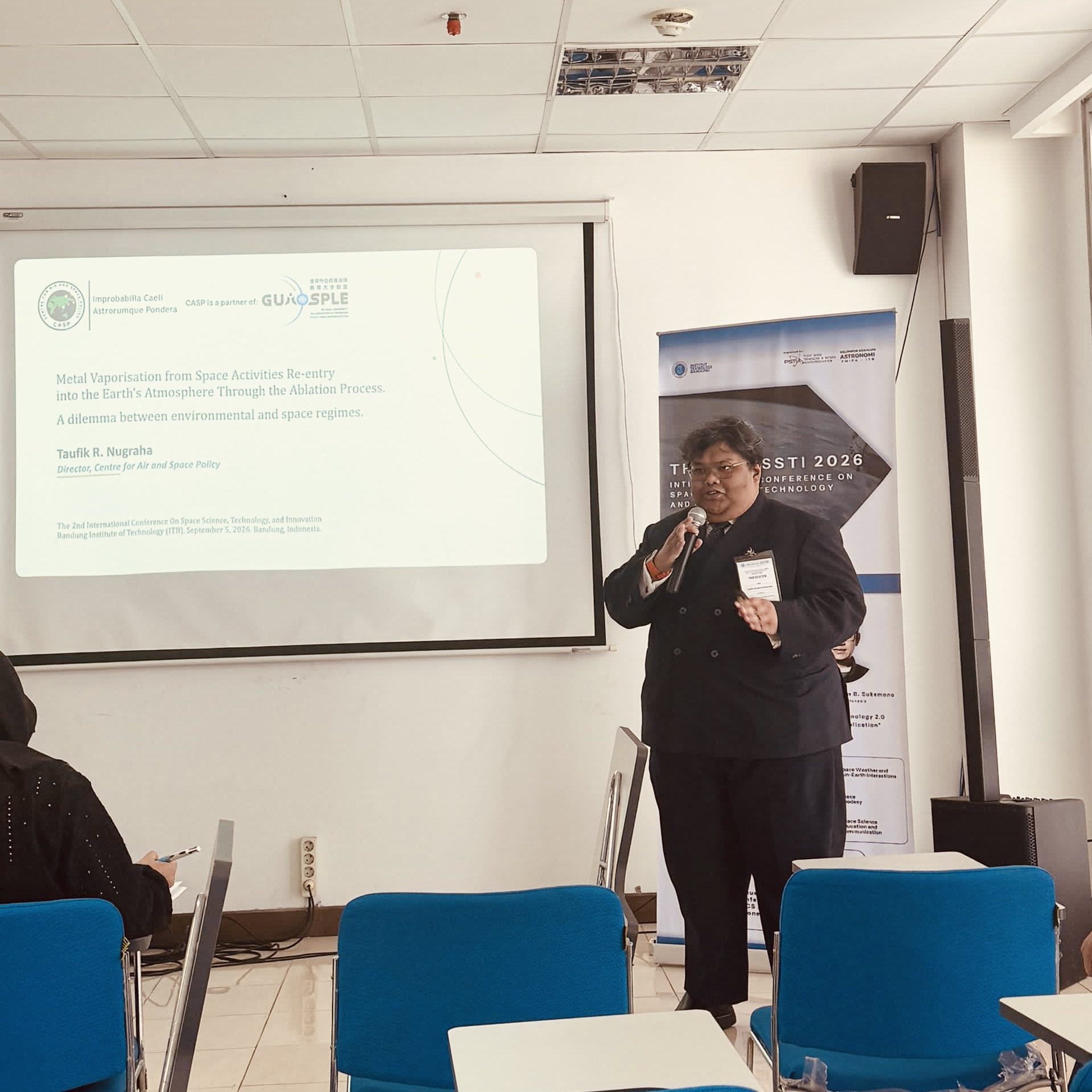
On September 5, 2026, Taufik R. Nugraha presented his research on metal vaporisation caused by space debris re-entry into Earth’s atmosphere through the ablation process. Taufik highlighted that metal vaporisation could affect the ozone layer, while scientists are still researching the other side effects on climate change.
Zero legal certainty on this matter; neither space law nor environmental law can answer these emerging issues, and the question of whether metal vaporisation is categorised as pollution or contamination remains vague, and both legal sources are in limbo. Taufik urged that the fundamental issue is to look to science as the basis for further policy, or science-based policy, to build comprehensive environmental protection in future space activities.
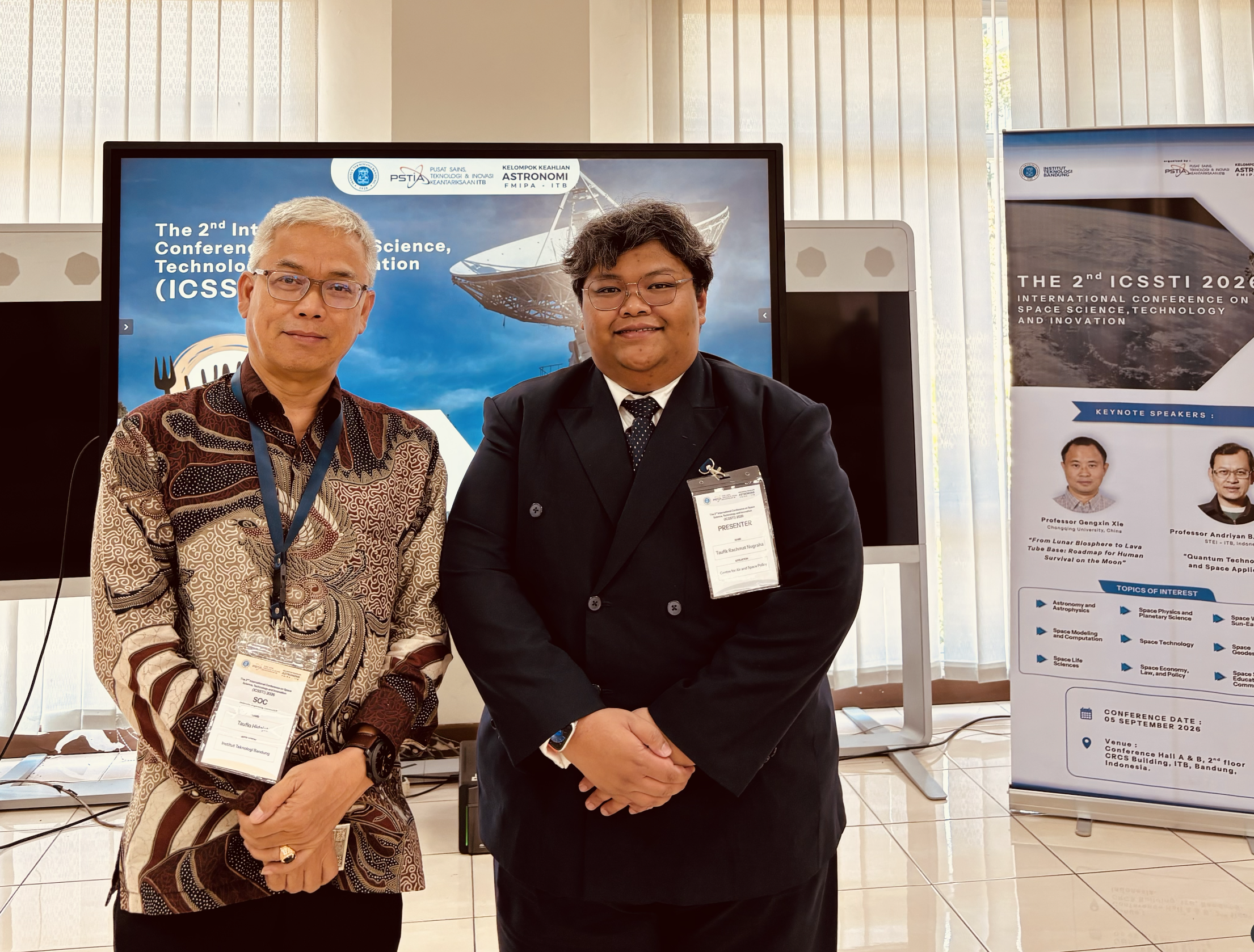
Besides the conference, Taufik also met the Head of Pusat Sains Teknologi dan Inovasi Keantariksaan (PSTIA-ITB)/ Centre for Science, Technology and Space Innovation-ITB, Prof. Dr Taufiq Hidajat, D.E.A., to introduce CASP and open a pathway for possible collaboration between PSTIA-ITB and CASP in the future to build a multidisciplinary approach and understanding of space activities.
CASP believes future space issues should involve scientists to better understand the problem and should not be addressed solely through a normative path. The 2nd ICSSTI conference is a great example of how scientists and lawyers/policy people met and discussed the common area.